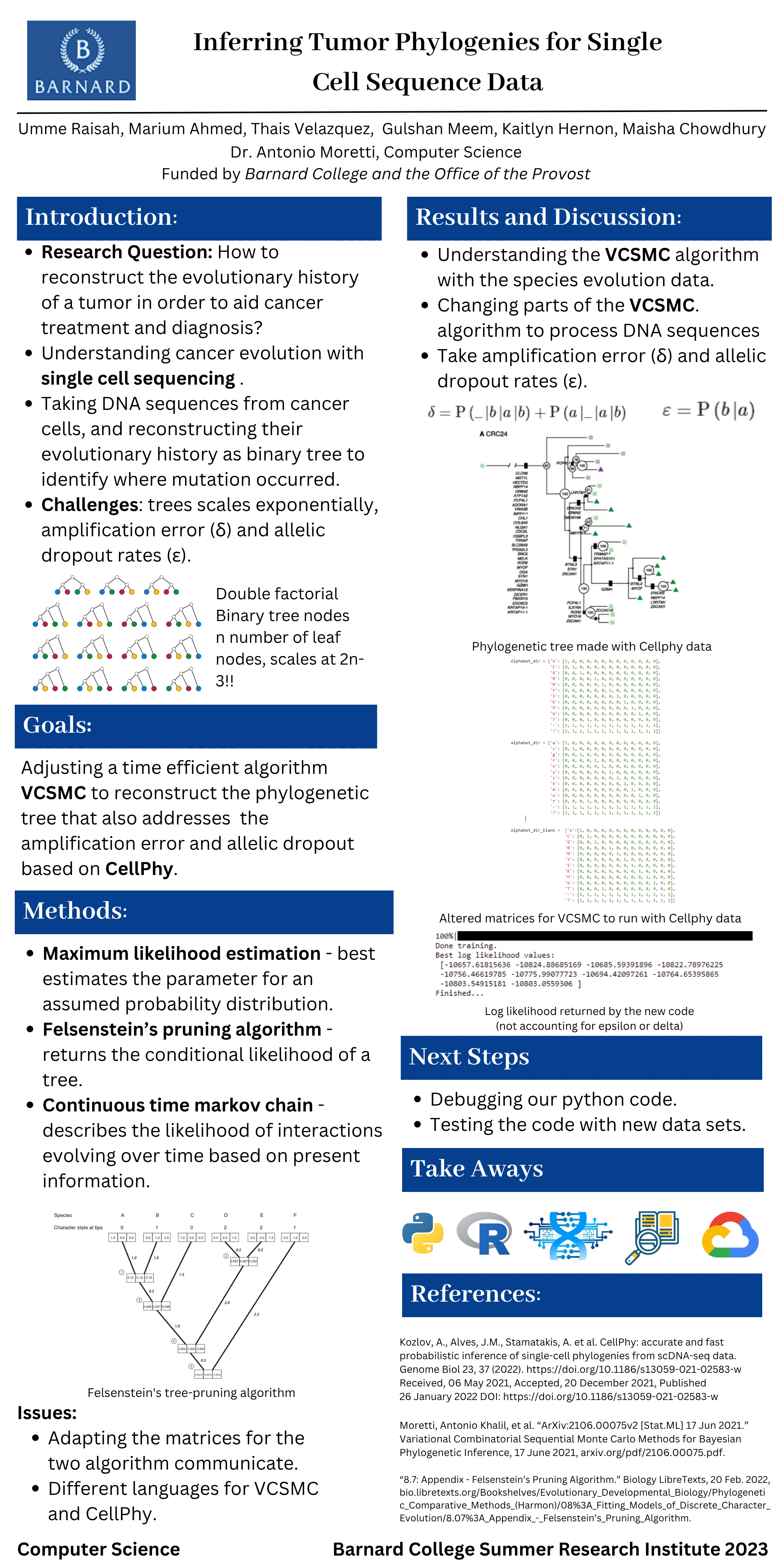
Game and Psychology Research
During my year-long research fellowship, I collaborated with Dr. Lisa Soros and a small research team to explore how “juicy” game design elements—vibrations, sound, and visual feedback—shape player curiosity and their sense of agency. Our project investigated how sensory feedback can create illusions of control in interactive systems, bridging principles from human–computer interaction (HCI), behavioral psychology, and game design.
I co-designed and developed a custom experimental game prototype in Godot 4.3, using procedural generation and custom sprite assets to build explorable virtual environments. The system tracked player interactions to quantify curiosity-driven behaviors across varying sensory conditions (no feedback, audiovisual, and haptic). I also co-authored a proposal for user study and we finished on the topic of a forthcoming paper.
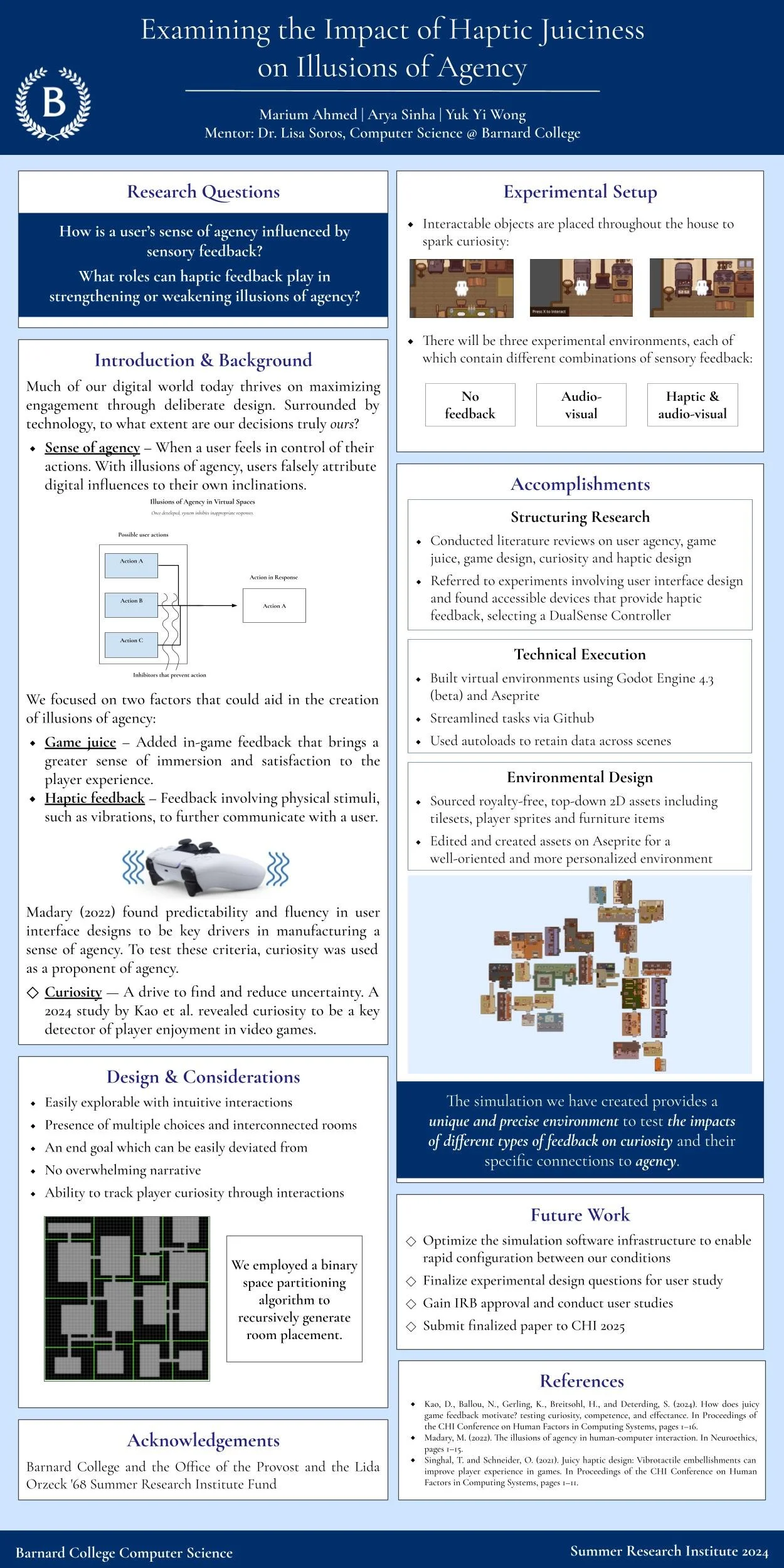
Bio-Tech Research
This project showed me how powerful computer science can be when applied outside of its own field. Even though I was just a freshman, I got to work with algorithms like Bayesian inference and Markov chains to model tumor evolution from DNA data. It was difficult, but I learned how to embrace complexity and work across disciplines, combining computer science with biology and statistics. What I enjoyed most was not just solving the technical problems, but also communicating the research in a way others could understand—because for me, research is about bridging fields and making knowledge useful.